Accessories

Posts Tagged M8

6

“We took MONSTER TORQUE with us!”

Stuart Hayim and John Tomlinson on their way to setting a new Around Long Island speed record. Photo credit: National Powerboat Association.

Mike Critchley putting the finishing touches on Stuart Hayim’s 1350 before sending to the dyno.

It was 5:12 am when my first email of the morning arrived: “Leaving the dock now. We took MONSTER TORQUE w us.” It was Stuart Hayim signaling the start of his around Long Island record run. Stuart’s brand new 42 MTI was powered with Mercury Racing 1350′s, M8 drives and 5-blade CNC Cleaver props. And he was pumped up! (He borrowed “Monster Torque” from our blog post headline of October 2010.) A couple hours later, at 8:37 am, I received another: “Record now back in hands. Of MHP, [Mercury Hi-Performance (now Racing)] thanks to the whole team.  2 hours 11 min. Sent from my iPhone”

It took a minute for the message to sink in — 2:11. 2:11!  That’s almost an hour off last year’s time — and Stuart’s previous record! The time is also about half of the record Bill Sirois and I had set back in 1968. John Tomlinson and Stuart Hayim didn’t just break the record. They smashed it! As Stuart says, “Tramps like us, baby, we were born to run!” I guess so.

“Tramps like us, baby, we were born to run!”

Stuart is all smiles as he and John prepare to embark on their historic run. Photo courtesy of Stuart Hayim.

I called Stuart to congratulate him. In classic Stuart speak, he said, “I can’t believe we left 11 minutes on the table. We could have run faster….When it got rough, Johnny kept asking if I was all right. I said, ‘At 65 years of age, I’m an old man, not a baby!’ …We could have shaved 11 minutes easily.” Read the rest of this entry »

1

Virtual Tour – Part 7: Cleaver Revolution

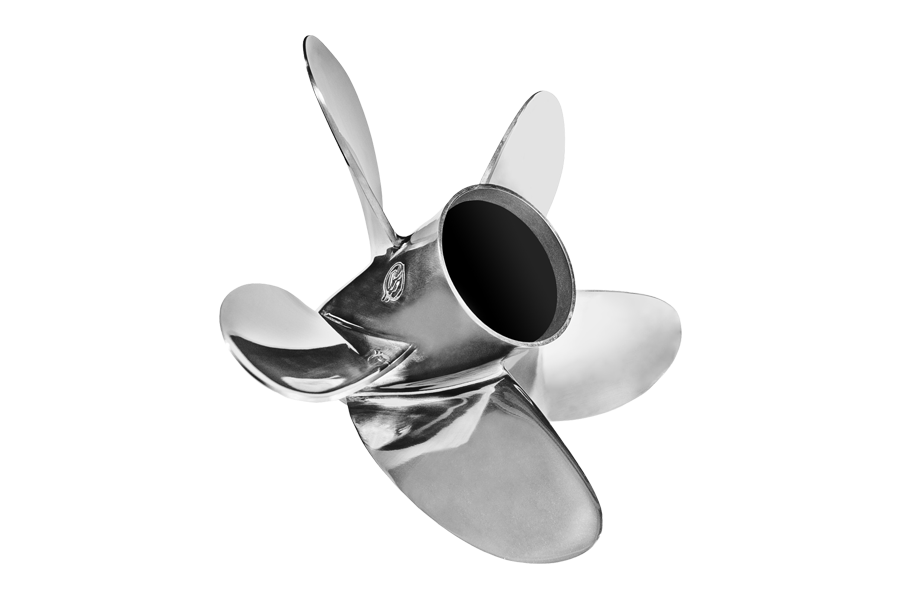
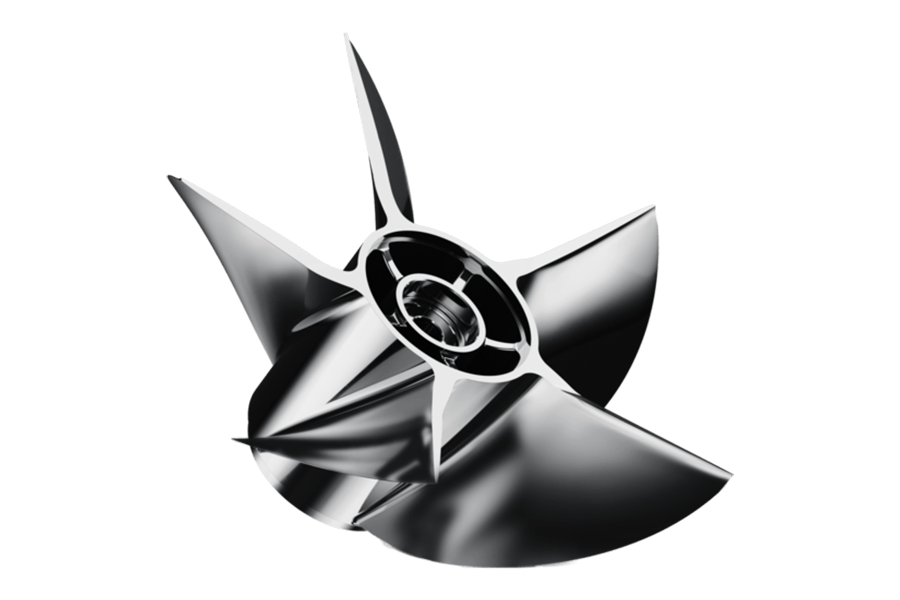
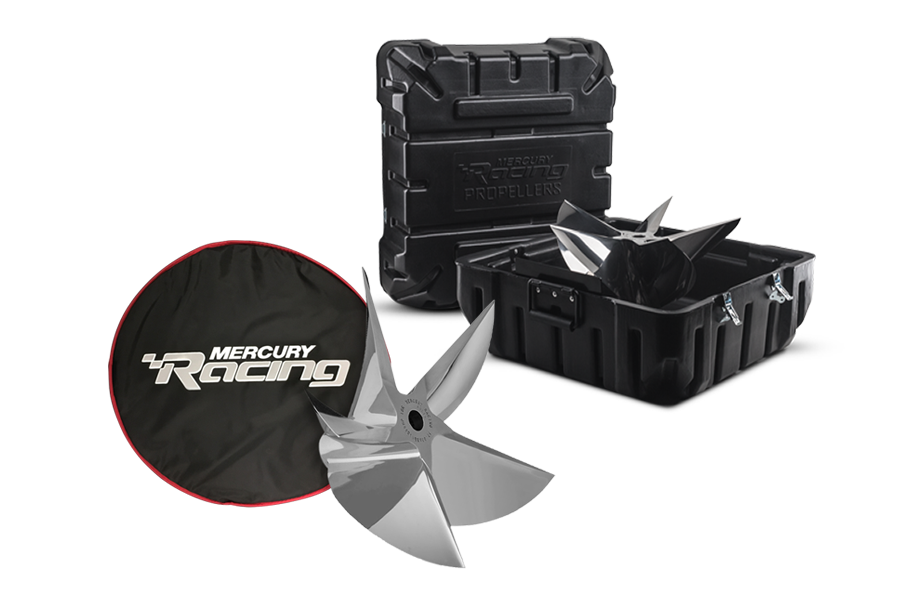
CNC machines produce our perfectly matched 5-blade or 6-blade cleaver propellers.

Skilled craftsmen hand-finish each CNC prop.

Continuing from Virtual Tour -  Part 6: Propellers…we’ll review the evolution of surface piercing propellers, culminating with our amazing CNC Sterndrive Cleavers.

I first reviewed my classic literature collection for information regarding the evolution of surface piercing propellers. Copy from the propeller section of  a 1972 Hi-Performance Mercury/MerCruiser Accessories catalog references our change from bronze to stainless steel that year. I sent Dick Snyder an e-mail to get his input regarding racing propeller history.

Dick Snyder

Three-blade “elephant ear” props on a quad 1250BP rig ready for testing at Lake X.

A 2-blade stainless prop on a merCruiser III drive. This drive was packaged with a 475 h.p. engine.

Dick Snyder was in charge of Mercury’s propeller engineering in the early ’60s.  “When I took over prop engineering in the early ’60s, I had inherited nothing but low rake (6 degree), 2-bladed props. We had no racing or hi-performance props. “There soon came a time when I fell in love with 15 degrees of rake and 3-bladed props for the added smoothness and a little better acceleration. You typically would lose a small amount of top-end going from a 2-blade to 3-blade prop. The higher 15-degree rake allowed the props to “hold” at greater trim angles for enhanced bow lift and greater hull efficiency. This resulted with even greater top-end speeds than the lower rake 2-blade props,” Dick explained. In 1984, Dick was promoted to Director of Mercury Hi-Performance. So he promoted Bob Hetzel to run Mercury’s racing prop and gearcase shop. “We had quite an interesting development of stainless steel props for racing, followed by replacing bronze for stainless steel on our recreational props,” said Dick. Read the rest of this entry »

1

Virtual Tour – Part 5: Sterndrives, Transoms & Accessories

Continuing from Virtual Tour – Part 4: Horsepower Highway…we will follow the assembly of Mercury Racing sterndrives, transoms and accessories.

Sterndrives

Mike Riedi inserts the drive shaft on a Bravo One XR Sport Master gearcase.

Mike lowers the Bravo One XR upper housing on the Sport Master gearcase.

Mercury Racing offers a variety of sterndrives fit for virtually any application. Bravo One XRs are enhancements of existing designs while NXT1, NXT6 and M8 drives were designed and developed in-house for Mercury Racing sterndrive packages. The Bravo One XR is a beefed up version of MerCruiser’s Bravo One drive. It was developed to withstand the rigors of offshore racing and performance boating. Our Bravo One XR Sport Master drive targets surface piercing applications. Bravo One XR and Bravo One XR Sport Masters are popular options for boats fitted with 525 EFI, 565 and 600 SCi engine packages. Mike Riedi, who has over 30 years experience building high performance outboard gearcases, also builds Bravo Sport Masters.

Transoms

Joe Backhaus building a M series transom plate.

Dave Vehrs preparing a NXT6 drive for the installation of the dry-sump oil pump.

Joe Backhaus builds Integrated Transom Systems (ITS) for Bravo One XR and Bravo Three XR drives. He also assembles M-Series transoms used with Mercury Racing  NXT1, NXT6 and M8 drives.

Next door to Joe, Dave Vehrs (when not man-handling our 18-wheel Marketing big rig in the Arizona Desert or Florida Keys) builds the drives to go with Joe’s transoms.

When I first started working here, I attended outboard and sterndrive service schools. Drive building was the sterndrive school’s main focus. A beginner quickly learns the challenge of building a drive – over and over – to get the shimming right for correct gear tolerances. It was with this experience that I gained an appreciation for what Mike and Dave do every day. I’m still a rookie; these fellas are top-shelf pros. Read the rest of this entry »

Virtual Tour – Part 4: Horsepower Highway

Continuing from Virtual Tour – Part 3: Outboard Production…we will follow the assembly of Mercury Racing big blocks – those based on GM’s 502 c.i. platform.

Horsepower Highway

Jon VanDenBogart prepares to install a crankshaft in a CNC machined 502 cu.in. cylinder block.

Pre-assembled pistons and connecting rods are matched to a designated cylinder block to ensure proper fit and function.

“Horsepower Highway” is where our 525 EFI, 565, 600 SCi , 662 SCi and 700 SCi sterndrive engine family is built. One technician hand builds each engine from a bare cylinder block to a “long block” (with all the rotating and reciprocating bits fitted inside). Sub-assembly work prior to an engine build includes the rotating assembly: balancing a crankshaft,  matching it with a camshaft, pistons, rings, and connecting rods for later fitment into the block.

Horsepower Highway was conceived, engineered and built in-house. It features a unique rail system and assembly fixtures used to transport cylinder blocks along the line. At each station, all the required tools and components are located for assembly. Each technician controls the speed of his build, moving the block along at their own pace. If something doesn’t look right, it is his discretion to stop right then and there. The build begins with installation of a camshaft. Next is the installation of a crankshaft, timing chain and matched piston and connecting rod sets. The bottom end is sealed with the installation of the oil pan.

The engine is rotated on its assembly fixture to enable work on the top end: The cylinder heads are installed; then push rods and rocker arms. Temporary valve covers mask the valve train prior to paint. An intake is the last component installed before the long bock goes to our paint line. Upon return from paint, it goes back on The Highway for installation of a bell housing.  Color matched valve covers replace the temporaries to complete valve train assembly. Transmissions for NXT1 or NXT6 drive models are installed at this point as well.

Jon rolls a 700 SCi long block along Horsepower Highway.

It’s not everyday one sees a Nanna Yeller 565 rolling along The Highway. Mike Rebedew puts finishing touches on the 8.7 Liter long block.

Long blocks for various engine models look similar. One noticeable difference is the intake (long blocks with naturally aspirated intakes are destined to become 525 EFIs or 565s; those with pressure charged intakes will become 600/662 or 700 SCi’s). Custom color long blocks stand out, too. The “dress line” is where an engine get its true personality. Read the rest of this entry »

2

Hi-Performance Boat Operation – Part 2: Rigging Fit & Function

Spring is a great time for newbie and veteran performance boaters alike to get familiar with their craft. For starters, you should review your owners manuals — really, you should — and review the key components of your new boat.

The OptiMax 300XS is very popular for singe and multple engine applications.

The 300XS on this Hydrostream features a 20-inch mid section and Sport Master gearcase.

Performance boats vary widely in propulsion and size. Outboards come in 20, 25 and 30-inch drive shaft lengths to accommodate a variety of applications. Mercury (and other brand) outboards are fitted with a standard gearcase for most applications. Hulls that can take advantage of the high power-to-weight ratio of an OptiMax 300XS may benefit from its wide range of gearcase options. Similarly, Mercury Racing offers a variety of sterndrives for differing power capacities and hull types.

Mercury Racing Zero Effort Digital throttles.

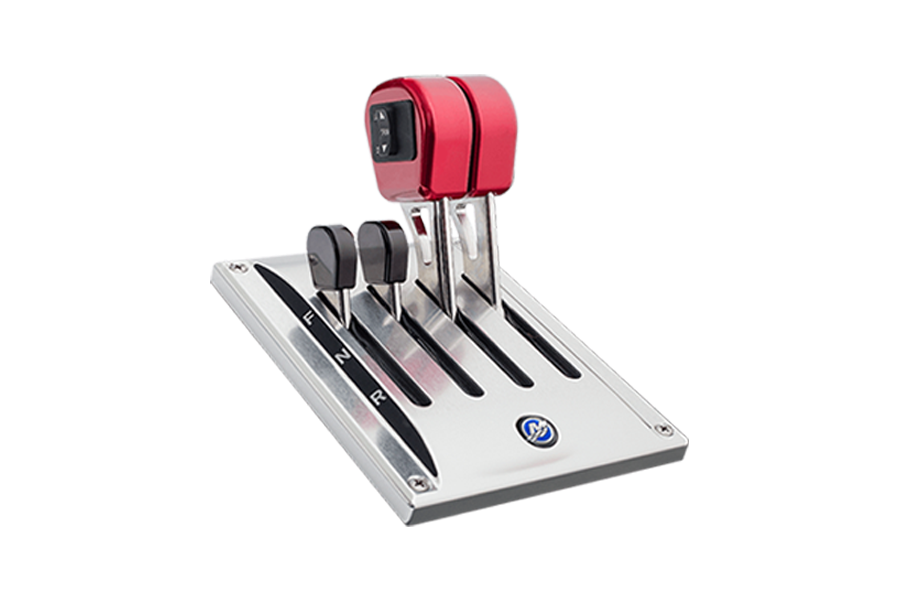
Mechanical control: High performance outboards are usually rigged with with dual steering cables, a shift cable, throttle cable and fuel line. With performance sterndrives, throttle and shift are accomplished with cables, but steering is hydraulic. These include 525, 600, 662 and 700 Mercury Racing packages.

Digital control: On SmartCraft Digital Throttle & Shift compatible outboards, such as the Verado 350 SCi and sterndrives including the 565, 1100 and 1350, mechanical throttle and shift cables are gone — replaced with a single electronic cable. Steering is either electric (Verado) or hydraulic (MerCruiser). Read the rest of this entry »

2

Fred’s Key West Adventure!

John Rosatti and crew as we prepare to depart Miami. (Photo courtesy of Intercept Boats.)

What started as a spectacular week in the Florida keys was clouded by tragedy: the deaths of Bob Morgan, Jeff Tillman and Joey Gratton because of individual boat blow-overs while racing in SBI’s Key West World Championships. Very sad and they will be missed. Heartfelt condolences to the families and friends of these gentlemen from all of us at Mercury Racing.

It is a beautiful day. With a full load of fuel aboard, we made way at 118 mph in the 50 foot Cigarette Marauder.

In contrast, the Florida Powerboat Club poker run from Miami to Key West was both safe and fun! Stu Jones’ event attracted over 175 entrants with more than 160 boats making the trek in four waves; one each day, Tuesday through Friday. I had the opportunity to meet many new friends and catch up with some I haven’t seen for a while. Read the rest of this entry »

1350s in Nordic 43 Enforcer!

The Nordic 43 Enforcer catamaran powered by twin Mercury Racing 1350 sterndrives.

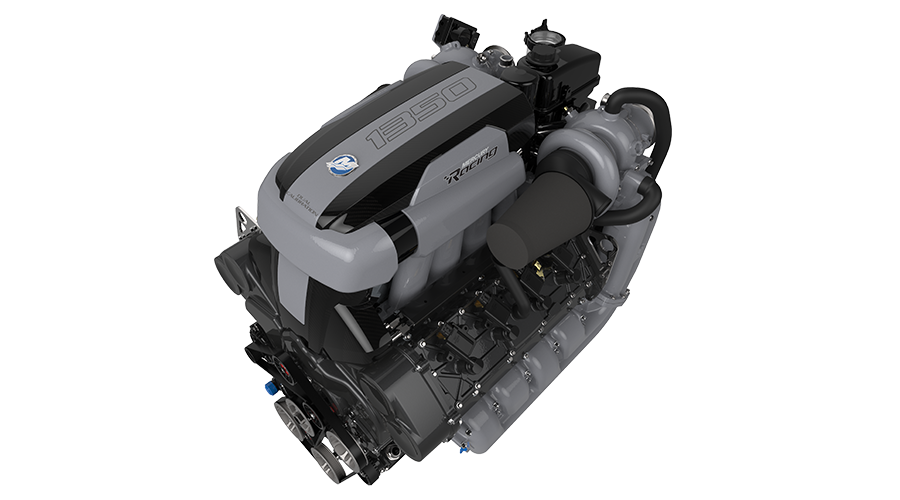
Randy Davis, owner of Nordic Boats, idles by Card Stop #2 during the 2011 Desert Storm Poker Run. This was the maiden voyage of Randy’s new Nordic 43 Enforcer catamaran – and, clearly, he was both impressed and delighted. It is powered with Mercury Racing’s 1350 engine and M8 drive packages. As nice as this boat runs and accelerates, I can’t help but be amazed by the idle quality of its quad cam, four valve engines.

As Randy’s crew glided by for their card, I wanted to capture the engines’ sound. Everybody else aboard just wanted to banter. I guess some people are normal, but I’m an unapologetic engine geek. Nevertheless, I caught some of the idle sound. Johnny B did a great job on the engine calibration! It just purred. Randy’s team did a very tidy installation! The 43 Enforcer’s beauty belies its intense performance.

For wide open engine sound, see and hear the pass by video footage on DCB’s M31 (Gary’s green one) and M35 (Mike’s orange one) and the fleet of 48 MTI’s (Derek’s black one; Bob’s more-or-less orange one and Albert’s uh, very colorful one)! I love the desert colors!

10

There’s a new predator in Miami!

No Miami International Boat Show would be complete without something up my sleeve. This time, it’s the “younger brother” to Mercury Racing’s 1350 engine. (I just could not call this tough fella “little brother.”)

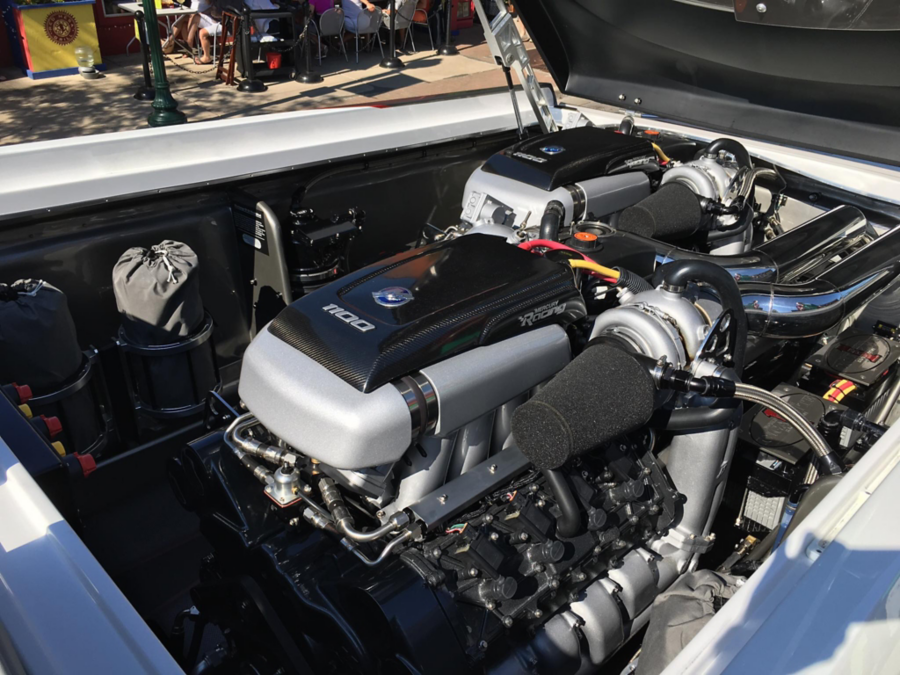
Mercury Racing's new 1100 twin turbo V-8 hammers with 1100 lb-ft of torque on 89 octane, mid-grade pump gasoline.

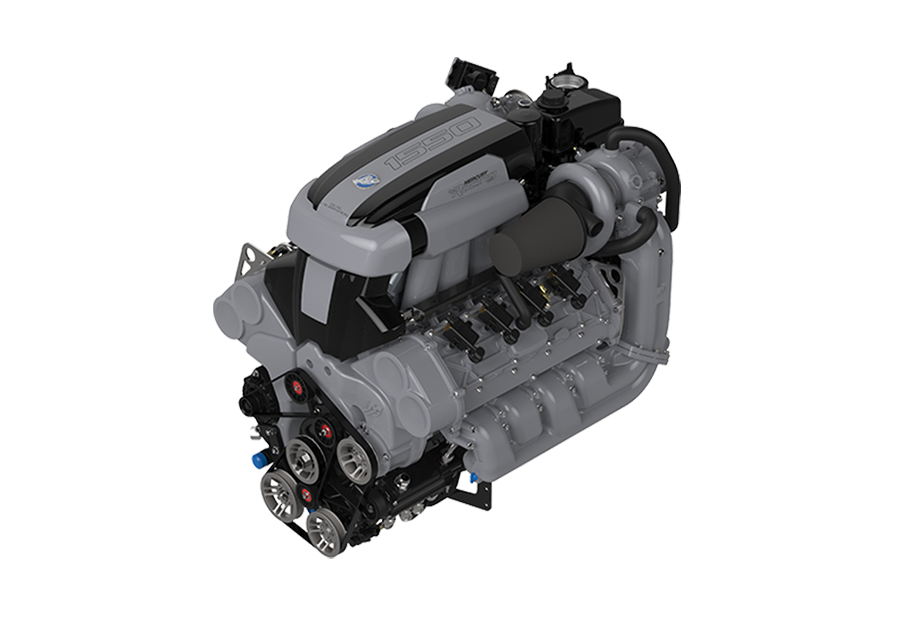
Ta dah!: Our 1,100 horsepower, twin turbo V-8 is here! Like the big guy, it’s a 9 liter, all aluminum, close cooled, quad-cam, four-valve engine. It begins production in April.

The 1100′s benefits are pretty straight forward: Compared to our 1075 SCi, it has a little more power and a lot more torque; compared to our 1350, it has a little less of each.  However, our new 1100 has over 1,100 lb-ft of torque on tap – in a wide RPM band all the way from 2,500 to 5,250! That’s more torque than our 1200 SCi engine! It delivers 1,100 horsepower at 6,500 RPM (red line). It requires less gasoline – less of it and lesser octane: It takes 89 (R+M)/2, mid-grade pump gas (the 1350 takes 91; the 1200 SCi takes 110 race gas!). The 1100 complies with EPA and CARB exhaust gas emissions limits. Maintenance requirements are less frequent, too. This is ideal power for offshore vees and cats.

Even with all its technology, our 1100 is offered at a price favorably comparable to Mercury Racing’s 1075 SCi. As good as our 1075 SCi is, it is out-performed in every metric by our newer technology. Therefore, the 1075 is discontinued. So too, is our 1200/1025 SCi dual fuel engine. Of course, refresh and service parts will continue for our SCi platform. Also, our 850 SCi through 525 EFI will remain in Mercury Racing’s product line.

Read the rest of this entry »

9

50 Years of Racing merCruisers – Part 2

Racing MerCruisers: 1988 – 2010 (continuing from 50 Years…Part 1)

1988 Superboat World Cup Champion, Don Johnson, with Sterndrives by Kiekhaefer and engines by Gentry.

The deal that wasn't: Mr. Seger had big ideas, but did not follow through. Ah, what might have been.

First, a relevant side bar: In 1985, a Swiss businessman and offshore racer, Hugo Seger, approached Kiekhaefer Aeromarine (KAM) to design a racing drive. He had tired of his drive failures. We agreed to a deal: KAM would design a drive, he would pay as we made progress, and would become our European distributor.

KAM looked back at the K-600 sterndrive because it was already tooled! But in the dozen years since 1973, we learned a propeller was happier when positioned higher and farther back. Since we dared not start with any handicap, we began to design anew. “Sterndrives by Kiekhaefer” was conceived. Designers, Larry Lohse and Tom Theisen, didn’t sleep much. Me either. Read the rest of this entry »

2

A Nordic New Year!

Super Silver, more Super Silver and Carbon: what a look!

Dressing up for New Year’s Eve? In the first ever pair in our Super Silver color option, the QC4v block and cam covers look all formal and serious (but no bow ties, just flowing Ms) for the dawn of 2011. These stunning appointments for Nordic will not only look sharp, contrasted with rich carbon fiber, but also pack some wallop!

Dave Dins at the controls for another 1350 dyno dance. What a sweet sound!

Like every Mercury Racing engine, these 1350s for Nordic must first pass the final dyno break-in and power run before they board the truck for Lake Havasu City. And they did. Once again, in excess of 1350 lb-ft of torque!

Sleek in silver, these matching M8 drives await shipping to Arizona. The Zeus pod drives in the background look industrial by comparison. Everything built at Mercury Racing is big and strong!

Also ready to ship are matching M8 sterndrives, likewise in Super Silver. I can’t wait to see the final installation. The color scheme will certainly be classy. I’m sure Randy Davis, the owner of Nordic Boats, is a bit impatient — knowing his 1350s are just being built.

Happy New Year, Randy! Your wait is over. You too can leave ‘em speechless.